Dandruff ka ilaj: what causes flakes, and the shampoos that actually work
Dandruff explained for men: why flakes and itching happen (yeast, oily scalp, seborrhoeic dermatitis), which anti-dandruff shampoo ingredients work (ketoconazole, zinc pyrithione, selenium sulfide, salicylic acid, coal tar), how to use them, home remedy myths, beard dandruff, and when to see a doctor.
Key points
- Most dandruff is caused by a mild inflammatory reaction to a yeast (Malassezia) that lives on everyone's scalp, together with oil and individual sensitivity. It's not caused by poor hygiene and isn't contagious.
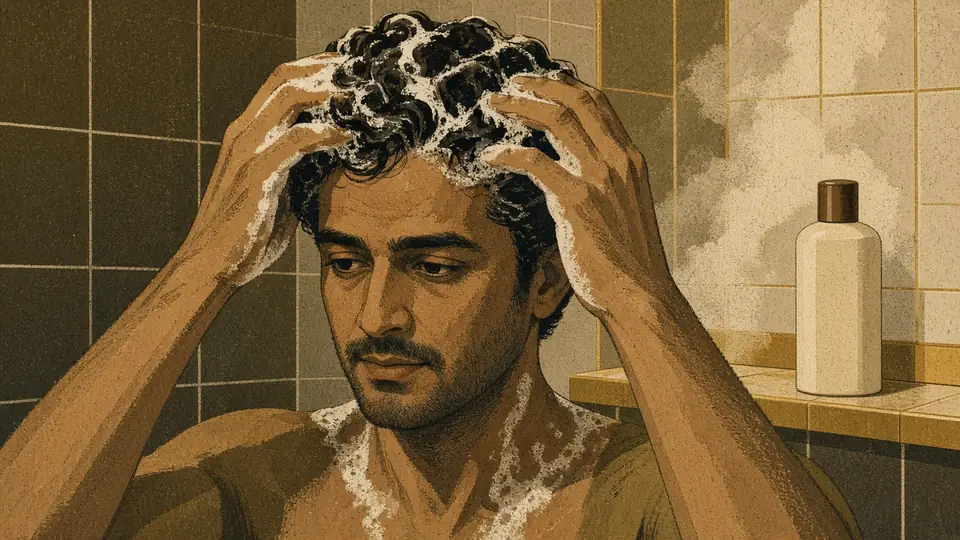
- Anti-dandruff shampoos work when used properly: lather, leave for 3–5 minutes, then rinse, 2–3 times a week at first.
- Effective ingredients include ketoconazole, zinc pyrithione, selenium sulfide, salicylic acid and coal tar. Rotate if one stops working.
- Dandruff can return, so most people need ongoing maintenance, such as once a week.
White flakes on a black kurta or office shirt, constant scalp itching, and the feeling that everyone's looking at your shoulders. Dandruff is extremely common, especially in men, in winter and in people with oily scalps.
The good news: dandruff is easy to control once you use the right product the right way. This guide explains what causes it, what really works, and which home remedies to skip.
What causes dandruff?
Dandruff is a mild form of seborrhoeic dermatitis. Three things combine:
- Malassezia, a yeast that lives on everyone's scalp and feeds on skin oils
- Oil (sebum), especially in oily scalps
- Individual sensitivity: some people's skin reacts to the yeast with inflammation and faster skin cell turnover, producing flakes
Things that make dandruff worse:
- Cold, dry weather and indoor heating
- Stress and lack of sleep
- Infrequent hair washing, allowing oil and flakes to build up
- Heavy oils left on the scalp for long periods
- Some conditions, such as Parkinson's disease or a weakened immune system
Dandruff isn't caused by being dirty, and it isn't contagious.
Dandruff or something else?
| Condition | Typical features |
|---|---|
| Dandruff | Small white or yellowish flakes, mild itch, oily or normal scalp |
| Dry scalp | Small, dry white flakes, often in winter, scalp feels tight; other skin dry too |
| Seborrhoeic dermatitis | Greasy yellow scales, redness, also on eyebrows, sides of the nose, behind ears or the beard |
| Scalp psoriasis | Thick, silvery, well-defined plaques, may extend beyond the hairline |
| Contact dermatitis | Itch, redness or burning after a new hair dye, shampoo or product |
| Fungal infection (tinea capitis) | Patchy hair loss with scaling, mostly in children |
Anti-dandruff shampoo ingredients that work
| Ingredient | How it works |
|---|---|
| Ketoconazole | Antifungal: reduces Malassezia yeast. Very effective. |
| Zinc pyrithione | Antifungal and antibacterial |
| Selenium sulfide | Slows skin cell turnover, reduces yeast. Can discolour light or dyed hair. |
| Salicylic acid | Loosens and removes scales. Can be drying. |
| Coal tar | Slows skin cell turnover. Useful for stubborn flaking and psoriasis. Strong smell; may stain light hair. |
How to use anti-dandruff shampoo properly
- Wet your hair and apply shampoo to the scalp, not just the hair.
- Massage gently with your fingertips, not your nails.
- Leave it on for 3–5 minutes. This is where most people go wrong.
- Rinse thoroughly.
- Use it 2–3 times a week until the flakes clear, usually within 2–4 weeks.
- Then use it once a week or once every two weeks for maintenance. Use a regular mild shampoo on other days.
- If one shampoo stops working, switch to a different active ingredient or alternate between two.
Follow the instructions on the product label.
Hair oil and dandruff
Oiling hair is a deep-rooted habit in Pakistan. But Malassezia feeds on oils, and leaving heavy oil on the scalp for long periods can worsen dandruff in some people. If you have dandruff:
- Reduce or stop scalp oiling for a few weeks and see if flaking improves.
- If you do oil, wash it out the same day.
- Choose lighter oils and apply mainly to hair lengths rather than the scalp.
Home remedies: what does the evidence say?
- Tea tree oil: one small study found a 5% tea tree oil shampoo improved dandruff. It can cause irritation or allergy, so never apply undiluted oil.
- Lemon juice: acidic, can sting and irritate; no good evidence.
- Dahi (yogurt), methi (fenugreek) paste, neem: popular, but no good evidence they work. They may make hair feel nice, but don't rely on them for real dandruff.
- Apple cider vinegar: little evidence; can irritate.
- Coconut oil: may help dry scalp, but may feed yeast in dandruff.
If you try a home remedy, patch-test first, and switch to a proven shampoo if it doesn't help in two weeks.
Beard dandruff
Flaky, itchy skin under the beard is often the same seborrhoeic dermatitis. Wash the beard with an anti-dandruff shampoo two or three times a week, leaving it on for a few minutes before rinsing. See beard after 35: grey, patchy or itchy.
Does dandruff cause hair fall?
Ordinary dandruff doesn't usually cause permanent hair loss, though scratching can damage hair and severe inflammation can increase shedding. If you're losing hair, see hair fall in men: causes and treatments.
Lifestyle tips
- Wash your hair regularly, especially if your scalp is oily.
- Manage stress and sleep.
- Avoid scratching, which can lead to soreness and infection.
- Rinse sweat out after the gym or a hot day.
- Some sun exposure may help, but always protect your skin.
A 4-week dandruff plan
| Week | Plan |
|---|---|
| 1 | Anti-dandruff shampoo 3 times a week, left on for 3–5 minutes. Stop heavy scalp oiling. |
| 2 | Continue. Use a mild regular shampoo on other wash days. |
| 3 | If flakes are much better, drop to twice a week. If not, try a shampoo with a different active ingredient. |
| 4 | Move to once-a-week maintenance. If there's no improvement, see a doctor or dermatologist. |
Dandruff and hair dye
Some men notice scalp itching and flaking after dyeing their hair or beard. This may be contact dermatitis from the dye, not dandruff. Common culprits include PPD in hair dyes. Patch-test 48 hours before each use, and stop if your scalp burns, itches badly or swells. See safed baal: safe hair dye.
Office and social life
Wearing lighter-coloured shirts and kurtas while you're treating dandruff makes flakes less visible. A quick brush of the shoulders before a meeting helps too. Once the shampoo routine is working, most men find flakes become rare.
See a doctor promptly if
- Your scalp is very red, painful, oozing or crusted, or has thick silvery scales (possible psoriasis).
- Flaking spreads to the face, ears, chest or eyebrows and doesn't improve with treatment.
- You have hair loss in patches with scaling (possible fungal infection, especially in children).
- Nothing has helped after 4–6 weeks of using an anti-dandruff shampoo correctly.
Frequently asked questions
Dandruff ka ilaj kya hai?
Anti-dandruff shampoo jis mein ketoconazole, zinc pyrithione ya selenium sulfide ho, hafte mein 2 se 3 baar istemal karein. Shampoo ko scalp par 3 se 5 minute rehne dein, phir dhoyen. Theek hone ke baad hafte mein ek baar use karte rahein.
Can dandruff be cured permanently?
Dandruff tends to come and go. It can be controlled well, but most people need occasional maintenance treatment.
Is hair oil good for dandruff?
Not usually. The yeast linked to dandruff feeds on oils, so heavy oil left on the scalp can make dandruff worse for some people.
Which shampoo is best for dandruff?
Shampoos containing ketoconazole, zinc pyrithione, selenium sulfide, salicylic acid or coal tar are effective. The best one is the one that works for you. Rotating between two ingredients can help.
Is dandruff contagious?
No. Dandruff isn't contagious and isn't caused by poor hygiene.
Sources
- NHS. Dandruff.
- American Academy of Dermatology. How to treat dandruff.
- DermNet. Seborrhoeic dermatitis.
- MedlinePlus. Dandruff, cradle cap, and other scalp conditions.
- Satchell AC, et al. Treatment of dandruff with 5% tea tree oil shampoo. Journal of the American Academy of Dermatology, 2002.
- American Academy of Dermatology. Seborrheic dermatitis: self-care.
Sources were checked on 26 November 2026. Found an error? Tell us and we will correct it.
Medical disclaimer: This article is general information, not a diagnosis or treatment plan. Please talk to a qualified doctor about your own situation. Read our full disclaimer.
Weekly tips for men over 35
Baal, skin aur beard: what actually works, in one short email a week. Free, no spam.
We only use your email to send this newsletter and never share it. Unsubscribe anytime, every email has a one-click link. Privacy policy
Shukriya! You're on the list. Pehli email jald aayegi.
Something went wrong. Please check your email address and try again.