Tond kam karne ka tarika: losing belly fat after 35
Why belly fat (tond) builds up after 35, why it matters for diabetes and heart health, how to measure your waist, the South Asian waist cut-offs, and a realistic diet, walking and strength plan that works.
Key points
- Belly fat (tond) isn't just about looks. Fat around the waist is linked to type 2 diabetes, high blood pressure and heart disease, and South Asians are at higher risk at lower body weights.
- For South Asian men, a waist size of 90 cm (about 35.5 inches) or more is a widely used warning cut-off.
- You can't spot-reduce belly fat with crunches or belts. Fat loss comes from eating a bit less, moving more, sleeping better and staying consistent.
- Aim for gradual weight loss, around 0.5–1 kg a week. Even losing 5–10% of your weight has real health benefits.
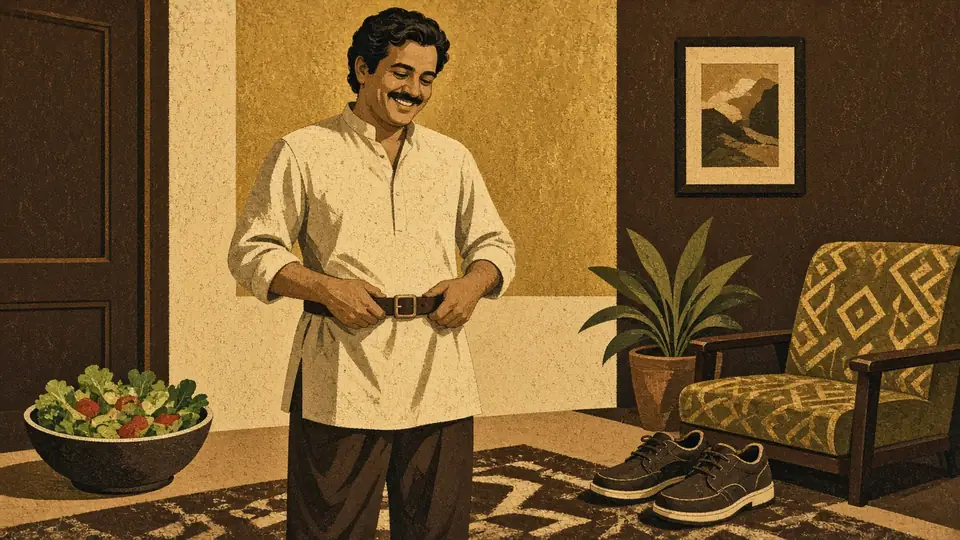
Somewhere in the mid-30s, it happens to many men: the shirt buttons start to strain, the belt moves a notch, and the tond arrives. Life gets busier, exercise drops, meals get bigger and later, and sleep gets shorter.
Belly fat is the butt of plenty of jokes. But it's also one of the clearest warning signs of future health problems. This guide explains why it happens, why it matters, and a realistic plan to bring it down.
Why belly fat builds up after 35
- Less activity: desk jobs, driving everywhere, and less sport than in your 20s
- Muscle loss: muscle mass gradually declines with age if you don't use it, which lowers the calories your body burns
- Bigger portions and more snacking: chai with biscuits, mithai, fried snacks, late heavy dinners
- Sugary drinks: cold drinks, juices, sweet chai
- Short sleep and stress, which affect appetite and hormones
- Genetics: South Asians tend to store more fat around the abdomen and inside the body, even at a "normal" weight
Why tond matters more than the scale
There are two main types of belly fat:
- Subcutaneous fat: under the skin, the fat you can pinch
- Visceral fat: deeper, around the organs such as the liver
Visceral fat is the more harmful type. It's linked to insulin resistance, type 2 diabetes, high blood pressure, high cholesterol, fatty liver and heart disease.
South Asians develop these problems at lower body weights and BMI than many other groups. That's why your waist is a better warning sign than your weight alone.
Measure your waist
- Stand up straight and breathe out normally.
- Find the top of your hip bone and the bottom of your ribs.
- Place a tape measure midway between them (usually around the belly button level), keeping it level and snug but not tight.
Waist cut-offs for South Asian men
The International Diabetes Federation uses a waist of 90 cm (about 35.5 inches) or more for South Asian men as a sign of increased risk (80 cm for South Asian women).
UK NICE guidance also suggests a simple rule for everyone: keep your waist to less than half your height. For example, if you're 170 cm tall, aim for a waist below 85 cm.
If your waist is over these limits, it's a good reason to get your blood sugar, blood pressure and cholesterol checked, even if you feel fine.
The truth about "belly fat burners"
- Crunches and sit-ups strengthen your abdominal muscles but don't burn the fat over them. You can't choose where you lose fat.
- Belts, wraps and "slimming" creams don't remove fat.
- Fat-burner pills and "slimming teas" sold online can contain hidden drugs or stimulants, and some have been linked to serious side effects. Avoid them.
- Lemon water, ajwain or saunf water on an empty stomach won't melt belly fat, though swapping sugary drinks for water does help.
Fat loss happens when you consistently take in slightly fewer calories than you burn. Your body then draws on fat stores, including belly fat.
The plan: food
You don't need to give up desi food. Small, sustainable changes work best.
Cut the liquid sugar first
- Replace cold drinks and packaged juices with water, lassi without sugar, or lemon water without sugar.
- Reduce sugar in chai gradually, from 2 spoons to 1, then half.
Portion control
- Use the plate method: half the plate vegetables or salad, a quarter protein (daal, chicken, fish, eggs, yogurt), a quarter roti or rice.
- One or two rotis instead of three or four. Choose whole wheat or mixed flour if possible.
- Less oil and ghee in cooking. Measure it instead of pouring.
Protein at every meal
Protein helps you feel full and protects your muscle while you lose fat: eggs, daal, chana, chicken, fish, yogurt.
Watch the "extras"
- Fried snacks: samosas, pakoras, parathas
- Mithai, biscuits and bakery items
- Late-night heavy dinners and second helpings at dawats
Eat earlier where possible
A lighter, earlier dinner helps many people. Avoid eating in front of the TV or phone.
The plan: movement
Walk every day
Start with 20–30 minutes of brisk walking most days, and build to at least 150 minutes a week of moderate activity, as recommended by the World Health Organization. Brisk means you can talk but not sing.
Tips: walk after dinner, take the stairs, park further away, take walking calls.
Strength training twice a week
Strength training builds and preserves muscle, which helps with blood sugar control and long-term weight management. Start with bodyweight exercises:
- Squats or sit-to-stand from a chair
- Push-ups (against a wall or table if needed)
- Lunges
- Planks
- Rows with a resistance band or water bottles
Two or three sessions a week, 20–30 minutes each.
Sit less
Get up and move for a few minutes every 30–60 minutes.
The plan: sleep and stress
- Aim for 7–9 hours of sleep. Short sleep is linked to weight gain and increased appetite.
- Manage stress with walking, prayer, breathing exercises or talking to friends, rather than late-night snacking.
- Cut down on smoking and other harmful habits.
How fast should it go?
Aim to lose around 0.5–1 kg a week. Crash diets usually lead to muscle loss and weight regain.
Even losing 5–10% of your body weight can improve blood sugar, blood pressure and cholesterol. For example, a 90 kg man losing 5–9 kg.
Track your waist every 2–4 weeks, not just your weight. If you're doing strength training, your waist may shrink even when the scale moves slowly.
See a doctor promptly if
- You're gaining weight quickly without changing your habits, or have swelling of the legs or tummy.
- You have diabetes symptoms: excessive thirst, frequent urination, tiredness or slow-healing wounds.
- You get chest pain, breathlessness or dizziness when exercising. Stop and get checked urgently.
- You're over 35 with a large waist and haven't had your blood sugar, blood pressure and cholesterol checked.
Frequently asked questions
Tond kam karne ka sabse tez tarika kya hai?
Koi jaadu ka tarika nahi hai. Sabse asar daar tareeqa hai: meethay drinks band karna, portion chhota karna, rozana brisk walk, hafte mein do baar strength training, aur poori neend. Isse 0.5 se 1 kg haftay ka wazan kam ho sakta hai.
Can I lose belly fat with crunches?
No. Crunches strengthen your abdominal muscles, but you can't spot-reduce fat. Overall fat loss through diet and activity shrinks belly fat.
What waist size is healthy for South Asian men?
A waist under 90 cm (about 35.5 inches) is a widely used target for South Asian men, and keeping your waist under half your height is a simple rule for everyone.
Are fat burner pills safe?
Many fat burners sold online have no proven benefit, and some have contained hidden drugs or stimulants with serious side effects. They're best avoided.
Why is belly fat dangerous?
Deep belly fat (visceral fat) is linked to type 2 diabetes, high blood pressure, high cholesterol, fatty liver and heart disease, and South Asians are at higher risk at lower weights.
Sources
- International Diabetes Federation. The IDF consensus worldwide definition of the metabolic syndrome.
- NICE. Overweight and obesity management (NG246).
- World Health Organization. Physical activity fact sheet.
- British Heart Foundation. Measuring your waist.
- Misra A, et al. Consensus dietary guidelines for healthy living and prevention of obesity, the metabolic syndrome, diabetes, and related disorders in Asian Indians. Diabetes Technology and Therapeutics, 2011.
- US Food and Drug Administration. Weight loss product notifications (tainted products).
Sources were checked on 26 November 2026. Found an error? Tell us and we will correct it.
Medical disclaimer: This article is general information, not a diagnosis or treatment plan. Please talk to a qualified doctor about your own situation. Read our full disclaimer.
Weekly tips for men over 35
Baal, skin aur beard: what actually works, in one short email a week. Free, no spam.
We only use your email to send this newsletter and never share it. Unsubscribe anytime, every email has a one-click link. Privacy policy
Shukriya! You're on the list. Pehli email jald aayegi.
Something went wrong. Please check your email address and try again.